

Introduction
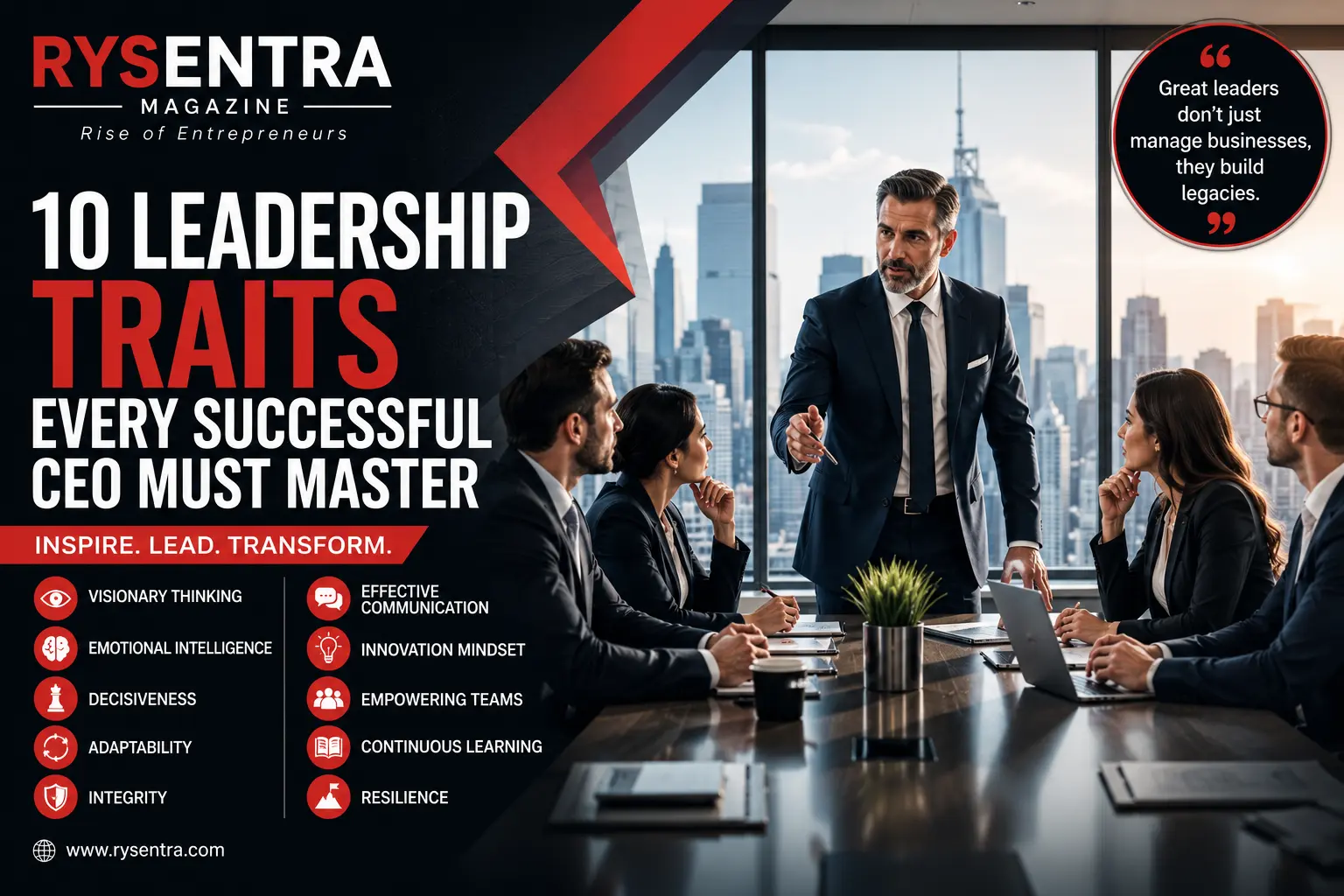
Leadership has always been the foundation of successful businesses, but in 2026, the expectations placed on CEOs are greater than ever. Rapid technological advancements, evolving workforce dynamics, global competition, and changing customer expectations demand leaders who can adapt, inspire, and innovate.
Today’s CEO is no longer simply responsible for managing operations or increasing profits. They must create a compelling vision, foster innovation, build resilient teams, embrace digital transformation, and lead with authenticity. Exceptional leadership has become one of the strongest competitive advantages any organization can possess.
History has shown that great companies are built by great leaders. Whether leading a startup or a multinational corporation, the qualities that define successful CEOs often determine the long-term success of their organizations.
This article explores the ten essential leadership traits every CEO should develop to thrive in today’s fast-changing business environment.
Table of Contents
- Visionary Thinking
- Emotional Intelligence
- Decisiveness
- Adaptability
- Integrity
- Effective Communication
- Innovation Mindset
- Empowering Teams
- Continuous Learning
- Resilience
- Frequently Asked Questions
- Conclusion
Why Leadership Matters More Than Ever
Modern businesses operate in an environment of constant change. Artificial intelligence, automation, remote work, cybersecurity, and economic uncertainty require leaders to make informed decisions quickly.
Employees seek meaningful work, customers expect exceptional experiences, and investors demand sustainable growth. CEOs must balance these competing priorities while maintaining a clear strategic direction.
Strong leadership enables organizations to:
- Navigate uncertainty with confidence.
- Build motivated and engaged teams.
- Encourage innovation.
- Improve customer satisfaction.
- Create sustainable long-term growth.
- Strengthen organizational culture.
Leadership is not simply about authority—it is about influence, trust, and the ability to inspire others to achieve a shared vision.
1. Visionary Thinking
Every successful CEO begins with a vision.
Visionary leaders look beyond today’s challenges and identify opportunities that others may overlook. They anticipate market trends, embrace emerging technologies, and prepare their organizations for future success.
A compelling vision provides clarity and direction for employees, partners, and investors.
Visionary CEOs ask themselves:
- Where will our industry be five years from now?
- What problems will customers face in the future?
- How can we remain competitive?
- What innovations should we invest in today?
When leaders communicate a clear vision, employees understand how their daily work contributes to larger organizational goals.
How to Develop Visionary Thinking
- Study global business trends.
- Follow technological innovations.
- Listen to customer feedback.
- Encourage creative thinking within your organization.
- Allocate time for strategic planning rather than focusing solely on daily operations.
2. Emotional Intelligence
Technical expertise alone is no longer enough to lead effectively.
Emotional intelligence (EQ) has become one of the most valuable leadership skills. CEOs with high emotional intelligence understand their own emotions while recognizing and responding appropriately to the emotions of others.
Leaders with strong EQ build trust, resolve conflicts effectively, and create psychologically safe workplaces.
Emotional intelligence includes:
- Self-awareness
- Empathy
- Self-regulation
- Motivation
- Strong interpersonal skills
Employees are more engaged when they feel heard, respected, and valued by leadership.
Practical Ways to Improve Emotional Intelligence
- Practice active listening.
- Seek honest feedback from colleagues.
- Show empathy during difficult conversations.
- Remain calm under pressure.
- Recognize employee achievements regularly.
3. Decisiveness
Business leaders make countless decisions every day.
Some involve hiring, others involve investments, product development, partnerships, or expansion into new markets.
Successful CEOs gather relevant information, evaluate risks, and make timely decisions without becoming paralyzed by uncertainty.
While not every decision will be perfect, delayed decisions often create greater problems than imperfect ones.
Characteristics of Decisive Leaders
- They analyze data efficiently.
- They trust experienced advisors.
- They communicate decisions clearly.
- They accept responsibility for outcomes.
- They learn from mistakes rather than dwelling on them.
Decisiveness inspires confidence throughout an organization because employees know leadership is willing to take action when necessary.
4. Adaptability
Business environments evolve rapidly.
Consumer behavior changes, technologies emerge, regulations shift, and competitors introduce new innovations.
CEOs who resist change risk falling behind.
Adaptable leaders embrace uncertainty as an opportunity rather than a threat.
Examples of adaptability include:
- Implementing AI-powered business tools.
- Transitioning to hybrid work models.
- Responding quickly to customer feedback.
- Updating products based on market demand.
- Exploring new revenue streams.
Organizations that adapt quickly often outperform competitors during periods of disruption.
How CEOs Can Become More Adaptable
- Encourage experimentation.
- Foster a culture that welcomes innovation.
- Stay informed about industry developments.
- Continuously evaluate business strategies.
- Learn from both successes and failures.
5. Integrity: The Foundation of Great Leadership
Integrity is one of the most respected qualities of any successful CEO. Employees, investors, partners, and customers are more likely to support leaders who consistently act with honesty, fairness, and accountability.
A CEO with integrity:
- Keeps promises and commitments.
- Makes ethical decisions, even when they are difficult.
- Accepts responsibility for mistakes.
- Treats employees with respect.
- Builds trust through transparency.
Integrity creates a strong organizational culture where people feel confident in leadership.
How to Build Integrity as a Leader
- Be transparent about challenges and successes.
- Admit mistakes and focus on solutions.
- Maintain consistency between words and actions.
- Encourage ethical behavior throughout the organization.
6. Effective Communication
A CEO’s ability to communicate can determine whether a company succeeds or struggles.
Great leaders communicate with clarity, confidence, and purpose. They ensure employees understand company goals, priorities, and expectations.
Effective communication also involves listening.
Successful CEOs actively seek employee feedback, customer opinions, and market insights before making important decisions.
Characteristics of Great Communicators
- Clear messaging.
- Active listening.
- Confidence without arrogance.
- Honest feedback.
- Inspiring storytelling.
Strong communication builds alignment across teams and increases employee engagement.
7. Innovation Mindset
Innovation is no longer optional—it is essential.
The most successful CEOs constantly look for ways to improve products, services, customer experiences, and internal operations.
Innovation isn’t limited to technology companies.
Restaurants innovate.
Retail businesses innovate.
Healthcare companies innovate.
Even small businesses can innovate through better customer service or improved business processes.
Encouraging Innovation
Successful CEOs create environments where employees feel safe sharing new ideas.
Practical approaches include:
- Innovation workshops.
- Cross-functional collaboration.
- Customer feedback sessions.
- Pilot projects.
- Continuous improvement programs.
Innovation becomes part of company culture when experimentation is encouraged.
8. Empowering Teams
Great CEOs understand they cannot build successful businesses alone.
Instead of controlling every decision, they empower employees to take ownership and contribute ideas.
Empowered teams typically demonstrate:
- Higher motivation.
- Better productivity.
- Faster decision-making.
- Increased creativity.
- Stronger collaboration.
Ways to Empower Employees
- Delegate meaningful responsibilities.
- Invest in employee training.
- Recognize achievements publicly.
- Encourage professional development.
- Trust employees to solve problems independently.
Employees who feel valued are more likely to remain committed to the organization.
9. Continuous Learning
Markets evolve constantly.
Technology changes rapidly.
Customer expectations shift.
Successful CEOs remain lifelong learners.
They invest time in reading business books, attending conferences, participating in executive education programs, and learning from mentors.
Learning helps leaders anticipate change rather than simply reacting to it.
Daily Learning Habits
- Read business news each morning.
- Follow industry experts.
- Listen to leadership podcasts.
- Attend networking events.
- Reflect on lessons from previous experiences.
Continuous learning enables leaders to make better strategic decisions.
10. Resilience
Every CEO experiences setbacks.
Businesses encounter economic downturns, failed product launches, staffing challenges, and unexpected market disruptions.
Resilience allows leaders to remain focused despite adversity.
Rather than giving up, resilient CEOs analyze situations, learn from mistakes, and move forward with renewed determination.
Building Resilience
- Maintain a long-term perspective.
- Prioritize physical and mental well-being.
- Develop strong support networks.
- Learn from failures.
- Celebrate progress, even during difficult periods.
History shows that many successful companies were built after overcoming significant challenges.
Leadership in the AI Era
Artificial Intelligence is transforming leadership.
Rather than replacing CEOs, AI enables leaders to make more informed decisions by analyzing data, forecasting trends, and automating repetitive tasks.
Modern CEOs use AI to:
- Improve customer insights.
- Predict market trends.
- Enhance employee productivity.
- Streamline operations.
- Support strategic planning.
The most successful leaders combine technological intelligence with human empathy.
Technology should enhance leadership—not replace it.
Common Leadership Mistakes CEOs Should Avoid
Even experienced leaders can make mistakes that hinder organizational growth.
Some of the most common leadership pitfalls include:
Micromanagement
Excessive control reduces employee confidence and limits innovation.
Poor Communication
Unclear expectations often lead to confusion and reduced productivity.
Fear of Change
Organizations that resist innovation risk becoming irrelevant.
Ignoring Employee Well-being
Burnout reduces morale, productivity, and long-term retention.
Focusing Only on Short-Term Results
Sustainable businesses require long-term strategic thinking rather than quarterly performance alone.
Avoiding these mistakes helps leaders build stronger organizations and healthier workplace cultures.
Actionable Leadership Tips for CEOs
If you want to strengthen your leadership abilities, consider implementing these practical habits:
- Start every week by reviewing long-term strategic goals.
- Schedule regular one-on-one meetings with team members.
- Encourage open feedback across all departments.
- Invest in leadership development programs.
- Read one business or leadership book each month.
- Celebrate team achievements frequently.
- Delegate responsibilities instead of micromanaging.
- Make decisions using both data and intuition.
- Stay informed about emerging technologies.
- Continuously evaluate your leadership style.
Leadership is a skill that improves with consistent practice.
Frequently Asked Questions
What is the most important leadership trait for a CEO?
Visionary thinking is often considered the most critical because it provides strategic direction for the organization while inspiring employees and stakeholders.
Can leadership skills be learned?
Yes. Leadership is a combination of mindset, experience, education, and continuous self-improvement. Most leadership traits can be developed over time.
Why is emotional intelligence important?
Leaders with strong emotional intelligence build better relationships, improve communication, and create healthier workplace cultures.
How does AI influence leadership?
AI supports better decision-making by providing insights, automating repetitive work, and improving operational efficiency. Human judgment remains essential.
How often should CEOs invest in personal development?
Continuous learning should become a regular habit. Successful CEOs dedicate time each week to reading, networking, and expanding their knowledge.
Conclusion
Exceptional leadership is not defined by authority alone—it is defined by the ability to inspire people, embrace change, make thoughtful decisions, and create lasting value.
The CEOs who will thrive in 2026 are those who combine strategic vision with emotional intelligence, integrity with innovation, and resilience with a commitment to continuous learning.
Leadership is a journey rather than a destination. Every experience, challenge, and success contributes to becoming a more effective leader.
By developing these ten essential leadership traits, business leaders can build stronger organizations, inspire high-performing teams, and create sustainable success in an increasingly competitive global economy.