

The business world is evolving faster than ever. Entrepreneurs today operate in an environment shaped by technology, changing consumer behavior, economic shifts, and digital transformation. Businesses that adapt early often gain a competitive advantage, while those that resist change risk becoming irrelevant.
Whether you are a startup founder, business owner, freelancer, or aspiring entrepreneur, understanding upcoming trends can help you make better decisions and build sustainable growth.
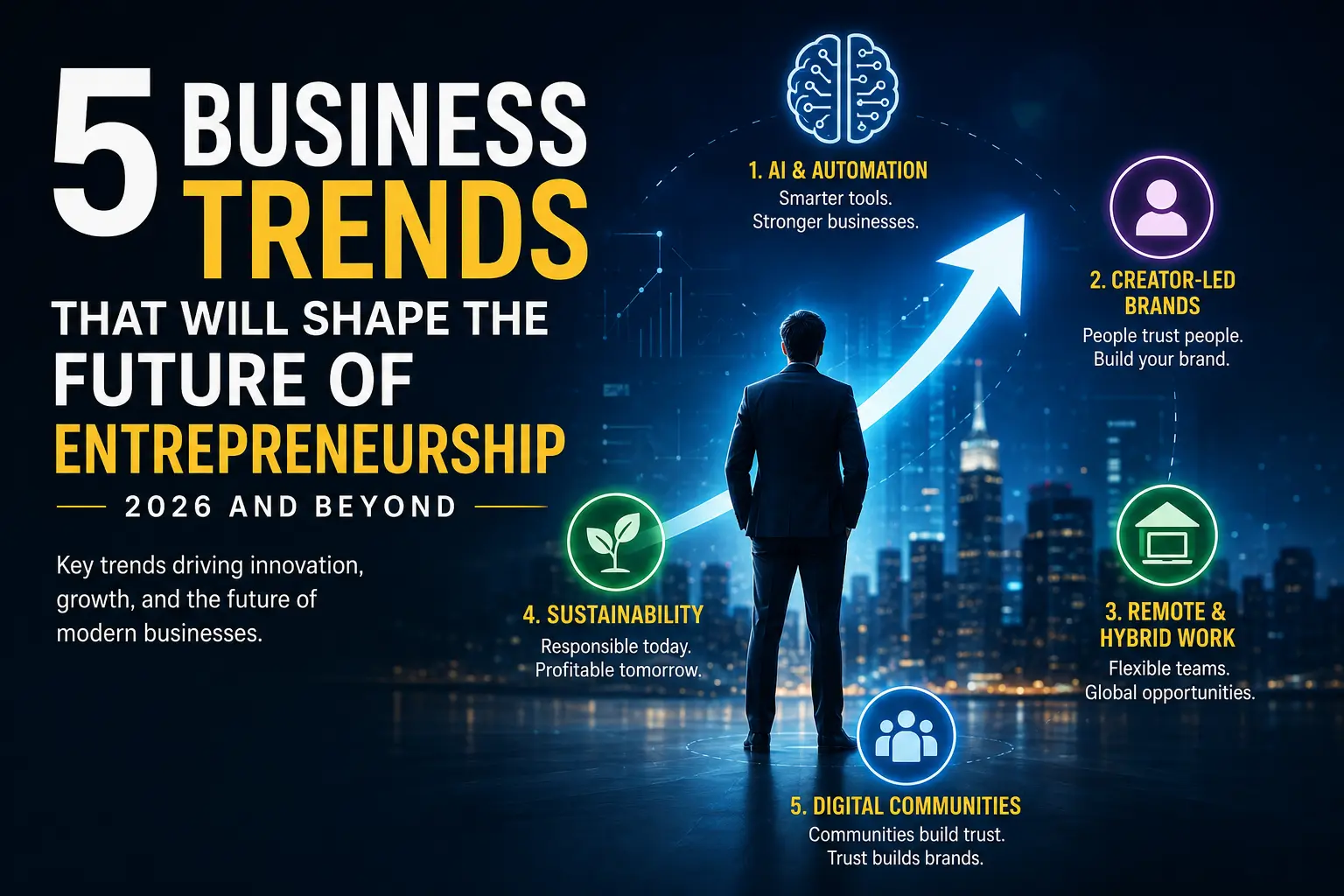
Here are five major business trends expected to shape entrepreneurship in 2026 and beyond.

1. Artificial Intelligence Will Become a Core Business Tool
Artificial Intelligence (AI) is no longer limited to large corporations. Small businesses, startups, and individual entrepreneurs are increasingly adopting AI-powered tools to improve efficiency and reduce operational costs.
Why AI Matters for Entrepreneurs
AI can help businesses:
- Automate repetitive tasks
- Improve customer service using chatbots
- Generate marketing content faster
- Analyze customer behavior
- Increase operational efficiency
Entrepreneurs who embrace automation can focus more on strategy, creativity, and growth rather than spending time on repetitive processes.
Business Impact
Companies using AI effectively may gain advantages in speed, productivity, and customer experience. Businesses that delay adoption could struggle to compete in increasingly digital markets.
2. Creator-Led Brands Are Becoming More Powerful
Consumers increasingly trust people more than traditional corporations. This shift has created massive opportunities for creator-led businesses and personal branding.
Today, entrepreneurs are building audiences before launching products.
Why Personal Branding Matters
Modern entrepreneurs use platforms like:
- LinkedIn for professional authority
- YouTube for educational content
- Newsletters for audience building
- Podcasts for thought leadership
- Social media for community growth
Strong personal brands help businesses attract customers, partnerships, and media attention.
Key Insight
People often buy from businesses they trust. Building credibility online has become a business asset rather than an optional activity.
3. Remote and Hybrid Work Models Continue to Expand
Remote work has changed how businesses hire, operate, and scale.
Companies are increasingly adopting hybrid models because they provide flexibility while reducing operational expenses.
Benefits for Entrepreneurs
Remote-first businesses can:
- Hire global talent
- Reduce office expenses
- Increase employee flexibility
- Scale faster with lean operations
- Improve workforce productivity
Challenges to Consider
Entrepreneurs must also address:
- Communication gaps
- Team collaboration
- Company culture
- Productivity management
The businesses that create efficient remote systems will remain competitive in talent acquisition and retention.
4. Sustainability Is Becoming a Business Requirement
Consumers today are more aware of environmental and social impact. Businesses focusing on sustainability are increasingly winning customer trust.
Sustainability is no longer only about environmental responsibility—it has become a growth strategy.
Examples of Sustainable Business Practices
- Eco-friendly packaging
- Ethical sourcing
- Reduced waste production
- Energy-efficient operations
- Social responsibility initiatives
Consumer Expectations Are Changing
Customers increasingly support brands aligned with their values. Entrepreneurs who integrate sustainability into business operations may strengthen customer loyalty and brand reputation.
5. Digital Communities Are Replacing Traditional Marketing
Traditional advertising alone is becoming less effective. Businesses now focus on building communities around their products, services, and mission.
Communities create stronger engagement and higher customer retention.
Community Building Strategies
Successful businesses build communities through:
- Email newsletters
- Online groups
- Exclusive content
- Events and webinars
- Social engagement
Why Communities Matter
Communities create:
- Higher customer loyalty
- Better customer feedback
- Lower marketing costs
- Increased referrals
- Long-term brand value
Building relationships often creates stronger results than focusing only on advertisements.
How Entrepreneurs Can Prepare for These Trends
Understanding trends is valuable, but execution creates results.
Entrepreneurs should focus on:
- Learning digital skills
- Investing in technology
- Building strong networks
- Creating adaptable business models
- Staying customer-focused
The future belongs to businesses that remain flexible and continue learning.
Conclusion
Entrepreneurship in 2026 will be shaped by technology, trust, flexibility, sustainability, and community building.
Businesses that embrace change early are more likely to thrive in competitive markets. While trends evolve constantly, one principle remains unchanged: entrepreneurs who adapt faster create stronger opportunities.
Success in the future will not depend only on having great ideas—it will depend on execution, innovation, and continuous adaptation.