

The Rise of the Visionary CEO: 3 Leadership Secrets to Succeed in 2027
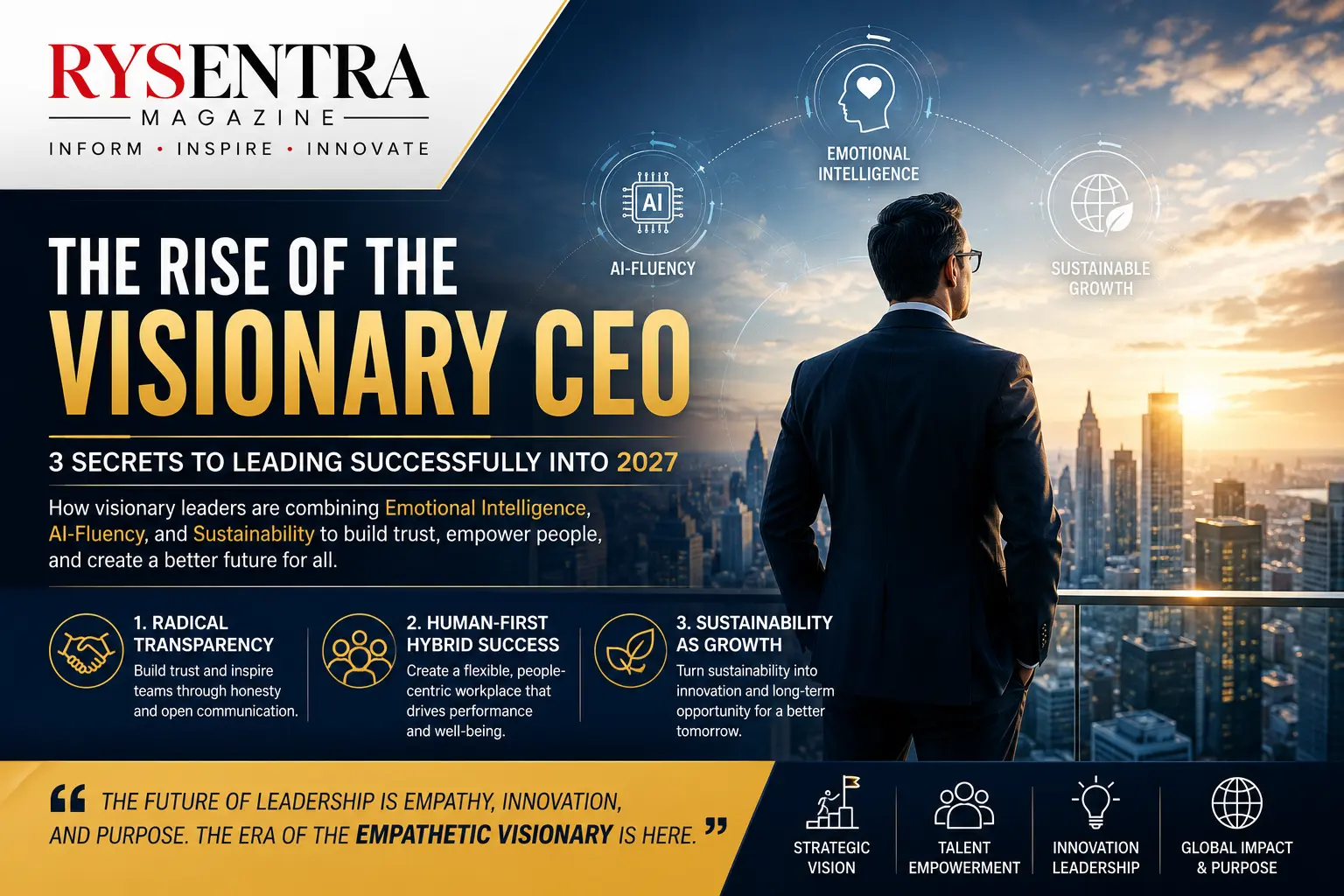
The role of a CEO has undergone a remarkable transformation over the past decade. Traditional leadership focused primarily on profitability, operational efficiency, and shareholder returns. Today, however, the world’s most successful organizations are led by visionary CEOs who combine strategic thinking with emotional intelligence, technological innovation, and sustainable business practices.
As we move toward 2027, businesses face unprecedented opportunities and challenges driven by artificial intelligence (AI), digital transformation, evolving workforce expectations, and environmental responsibility. The CEOs who embrace these changes are building resilient organizations, attracting top talent, and positioning their companies for long-term success.
The future belongs to leaders who inspire people, make ethical decisions, and leverage technology to create lasting value. Here are the three leadership secrets that define the modern visionary CEO.
1. Build Trust Through Radical Transparency
Trust has become one of the most valuable assets a business can possess. Employees, customers, investors, and partners expect leaders to communicate openly, especially as organizations increasingly adopt artificial intelligence and automation.

Rather than viewing AI as a replacement for human talent, visionary CEOs position technology as a tool that empowers employees to work smarter, innovate faster, and focus on higher-value activities. Transparent communication about AI adoption helps reduce uncertainty while strengthening confidence across the organization.
Leaders who openly discuss business goals, company performance, technological changes, and future strategies create an environment where employees feel informed, respected, and motivated.
Why Transparency Matters
- Builds stronger employee trust
- Encourages collaboration across teams
- Reduces resistance to change
- Improves innovation and creativity
- Strengthens organizational culture
Transparency is no longer simply a leadership quality—it has become a competitive advantage for organizations navigating rapid technological change.
2. Embrace the Human-First Hybrid Leadership Model
The workplace has evolved significantly in recent years. Employees increasingly value flexibility, autonomy, and work-life balance, making hybrid work an essential component of modern business strategy.
The most effective CEOs understand that productivity is not determined by physical presence alone. Instead, they create a Human-First Hybrid Model that balances remote work with meaningful in-person collaboration.
Office environments are becoming innovation hubs where teams brainstorm, solve complex challenges, and strengthen relationships, while remote work provides employees with uninterrupted time for focused, high-quality work.
Characteristics of Human-First Leadership
- Flexible work policies
- Employee well-being initiatives
- Mental health support
- Continuous learning opportunities
- Inclusive workplace culture
- Results-driven performance management
Organizations that prioritize employee well-being often experience higher engagement, stronger retention, and improved productivity. By putting people first, visionary CEOs create workplaces where individuals and businesses can grow together.
3. Turn Sustainability into a Competitive Advantage
Sustainability has evolved from a corporate responsibility initiative into a powerful business growth strategy.
Forward-thinking CEOs recognize that environmental responsibility and profitability are not opposing goals—they are mutually reinforcing. Companies that invest in sustainable operations frequently reduce costs, improve efficiency, strengthen brand reputation, and attract environmentally conscious customers and investors.
Modern business leaders are integrating sustainability into every aspect of their organizations by adopting carbon-tracking technologies, improving energy efficiency, reducing waste, and embracing environmentally responsible supply chains.
Benefits of Sustainable Leadership
- Stronger brand reputation
- Increased investor confidence
- Greater customer loyalty
- Lower operational costs
- Enhanced regulatory compliance
- Long-term business resilience
Organizations that embrace sustainability today are better positioned to compete in tomorrow’s global economy.
The Leadership Skills Every Visionary CEO Needs in 2027
Beyond these three strategic pillars, successful CEOs consistently demonstrate several essential leadership qualities that enable them to navigate uncertainty and inspire high-performing teams.
Emotional Intelligence (EQ)
Exceptional leaders understand that business success begins with people. Emotional intelligence helps CEOs communicate effectively, resolve conflicts, build trust, and create positive workplace cultures.
AI Fluency
The CEOs of the future do not need to become software engineers, but they must understand how AI can improve decision-making, automate repetitive tasks, enhance customer experiences, and unlock new business opportunities.
Strategic Thinking
Visionary CEOs focus on long-term value rather than short-term gains. They continuously evaluate market trends, anticipate industry disruptions, and position their organizations for sustainable growth.
Adaptability
Rapid technological advancement requires leaders to remain flexible. CEOs who embrace change rather than resist it are better equipped to respond to evolving customer needs and competitive pressures.
Purpose-Driven Leadership
Today’s employees want to contribute to organizations with meaningful missions. Leaders who connect business success with positive societal impact inspire greater employee commitment and customer loyalty.
Why Visionary CEOs Are Winning the Future
Businesses that embrace transparent leadership, human-centered workplaces, and sustainable innovation consistently outperform organizations that rely solely on traditional management approaches.
The next generation of leadership is characterized by:
- Ethical use of artificial intelligence
- Continuous innovation
- Employee empowerment
- Data-driven decision-making
- Inclusive workplace cultures
- Sustainable business practices
- Customer-centric strategies
- Long-term value creation
Visionary CEOs understand that exceptional leadership is about creating value for employees, customers, shareholders, communities, and the environment simultaneously.
How Business Leaders Can Prepare for 2027
Whether you’re an aspiring entrepreneur, startup founder, executive, or established CEO, developing future-ready leadership skills should be a top priority.
Here are practical steps to strengthen your leadership journey:
- Invest in emotional intelligence and communication skills.
- Stay informed about emerging AI technologies.
- Build a culture of transparency and trust.
- Support employee well-being and flexible work.
- Incorporate sustainability into your business strategy.
- Encourage innovation across all departments.
- Make decisions based on both data and human insight.
- Continuously learn from industry leaders and market trends.
Leadership is no longer defined by authority alone—it’s measured by the ability to inspire meaningful change.
Conclusion
As businesses prepare for 2027, the definition of successful leadership continues to evolve. The most influential CEOs are those who combine emotional intelligence, technological innovation, transparency, and sustainability to build organizations that thrive in an increasingly complex world.
The rise of the Visionary CEO marks a new era where empathy, agility, and purpose-driven leadership become the foundation of long-term business success.
Organizations led by visionary CEOs are not simply adapting to change—they are shaping the future of business.
The leaders who embrace these principles today will be the ones inspiring innovation, empowering people, and creating lasting impact for generations to come. leadership models are being tested, a new generation of visionary CEOs is thriving by embracing Emotional Intelligence (EQ) and AI-Fluency. Data shows that leaders who prioritize mental well-being and ethical AI integration see a 40% higher employee retention rate, creating more sustainable and joyful workplaces. Leadership models are being tested, a new generation of visionary CEOs is thriving by embracing Emotional Intelligence (EQ) and AI-Fluency. Data shows that leaders who prioritize mental well-being and ethical AI integration see a 40% higher employee retention rate, creating more sustainable and joyful workplaces.
1. Building Trust Through Radical Transparency
The most successful leaders today are those who lead with honesty. By being transparent about how Artificial Intelligence is used to empower—rather than replace—human potential, they build deep trust. This foundation of integrity allows teams to innovate faster and scale with confidence.
2. The “Human-First” Hybrid Success
2026 is the era of the Human-First Hybrid Model. This approach celebrates flexibility, using office spaces for high-impact creative collaboration while respecting the need for deep, focused work at home. Leaders who master this balance are not just winning the talent war; they are building happier, more productive global communities.
3. Sustainability as a Growth Opportunity
Sustainability has become a powerful engine for innovation. Forward-thinking CEOs are proving that profitability and planetary health go hand-in-hand. By integrating carbon-tracking and eco-friendly practices, they are ensuring a brighter, more prosperous future for everyone.
Conclusion: The future of leadership is bright. By being agile, empathetic, and tech-savvy, today’s leaders are transforming challenges into opportunities. The era of the “Empathetic Visionary” is here, and it is inviting every leader to help build a better world.