

Founder of Vizura Studio® shares why staying small can be a deliberate growth strategy—and how specialization, systems and strategic thinking are shaping the future of his B2B and technology branding practice.
By Rysentra Editorial Team
In a creative industry where growth is often associated with larger teams, more clients and increasingly complex organizational structures, Vedran Obradović has chosen a different path.
The founder of Vizura Studio®, an independent branding studio based in Zagreb, Croatia, has deliberately built the business as a one-person practice. But the decision to remain small is not a decision to think small.
Related Post


For Obradović, growth has never been about headcount.
“I never really saw headcount as the goal,” he explains. “What I wanted was to build a studio where the person the client talks to is also the person doing the thinking, making the decisions and carrying the work through to the end.”
That philosophy has become the foundation of Vizura Studio®—a specialist practice focused primarily on B2B and technology branding, including SaaS, AI, cybersecurity, infrastructure, finance and consulting.
The studio’s ambition is global, even if its structure remains intentionally lean.
Building a Studio Around the Work, Not the Org Chart
For Obradović, the decision to remain a one-person studio began with a simple preference: keeping strategy and execution connected.
In a traditional agency structure, a project can move through multiple layers between the initial client conversation and the final creative work. Obradović wanted to avoid unnecessary distance between the business problem and the person solving it.
“That does not mean I am against collaboration or that I think every business should stay small,” he says. “For me it is simply a deliberate operating model.”
Keeping Vizura Studio® lean allows him to stay close to the work, make decisions quickly and maintain consistency throughout a project.
The ambition, however, can remain large.
Rather than adding people simply because growth is expected to look that way, Obradović wants the studio to grow through better projects, stronger specialization, better systems and a broader international reputation.
That distinction—between growing the business and simply growing the organization—is central to his approach.
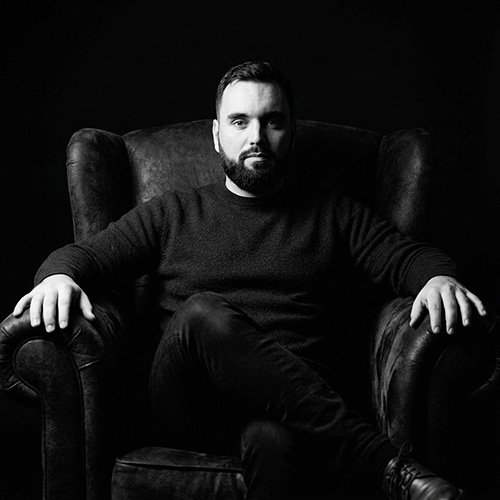
For Obradović, remaining small is a deliberate operating model designed to keep thinking, decision-making and execution closely connected.
Growth as Leverage, Not Size
So what does growth actually mean when increasing the size of the team isn’t the primary objective?
For Obradović, it is about leverage.
He looks at whether projects are becoming more interesting and complex, whether clients are a better fit, whether the work is reaching stronger markets and whether the studio can create more value without adding unnecessary layers around the work.
Specialization plays an important role.
So do stronger systems, better positioning, compelling case studies and a reputation that creates trust before the first conversation even begins.
Growth can even mean saying no more often.
“If the studio becomes clearer about what it is good at, it should not need to take every opportunity,” Obradović explains.
Over the next few years, his ambition is for Vizura Studio® to become more internationally recognized for B2B and technology branding, while developing deeper strategic relationships with clients.
If the business becomes more valuable, more respected and more capable while remaining structurally lean, he considers that real growth.
Why B2B and Technology Branding?
The specialization wasn’t simply a business decision. It grew from the types of problems Obradović found most interesting.
Technology and B2B companies often have products that are technically sophisticated, complex or difficult to explain.
The product itself may be excellent. But communicating its value clearly can be much harder.
That is where Obradović sees branding playing a strategic role.
“The challenge is not only to make it look better,” he says. “It is to make the business easier to understand, easier to trust and easier to remember without flattening what makes the product valuable.”
That challenge suits the way he likes to work.
Before thinking about the visual identity, he wants to understand how the product works, where the category has become generic, what the buyer needs to understand and how those insights can become a clearer identity system.
AI, SaaS, cybersecurity, infrastructure and finance are particularly interesting because trust is critical in these categories.
A company can be technically strong and still lose credibility if its brand feels vague, interchangeable or less mature than the product behind it.
For Vizura Studio®, the visual challenge is therefore inseparable from the strategic one.
Specialization Creates a Different Kind of International Reach
Specialization has also influenced the kind of clients Vizura Studio® attracts.
When a SaaS founder or B2B technology company encounters a portfolio built around clarity, trust, positioning and identity systems, there is less translation required.
The client doesn’t have to imagine whether a generic design portfolio can understand their world.
The relevance is already visible.
That has helped Obradović build international opportunities from Zagreb.
“International work became easier once the portfolio itself started doing more of the explanation,” he says.
For a founder in the United States, the United Kingdom or another market, geographical proximity is not necessarily the deciding factor.
Understanding the category and solving the problem are often more important.
That has created a useful cycle for Vizura Studio®:
More relevant work → stronger examples → more relevant clients → deeper category expertise.
Obradović still works outside technology when the fit is right, but he has found that being known for something specific is more valuable than attempting to appear suitable for every possible client.
Building an International Business from Zagreb
Zagreb remains the studio’s base, but Obradović does not see the city as a limitation.
He initially developed his international client base through remote freelance work and platforms such as Upwork. Over time, that evolved into direct relationships through referrals, repeat clients, his portfolio, website and professional network.
Being comfortable working remotely and across time zones matters.
But for Obradović, the bigger factor is trust.
“I actually like being based in Zagreb while working internationally,” he says. “It keeps the studio connected to a real place without forcing the business to depend on one local market.”
The result is a model that is geographically rooted but commercially international.
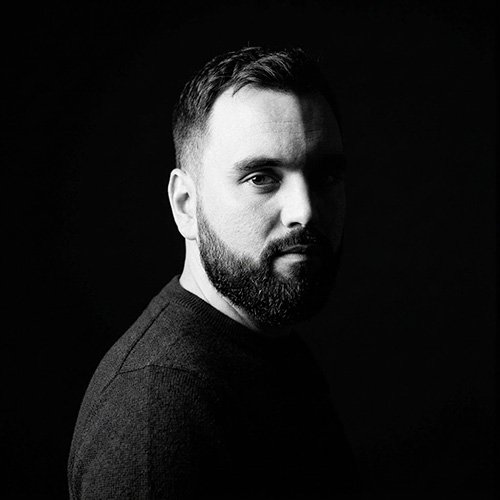
Based in Zagreb, Vizura Studio® works with clients beyond the boundaries of its local market.
The Systems Behind a One-Person Studio
Keeping a business small doesn’t mean running it informally.
In fact, Obradović believes the opposite.
“One of the biggest shifts was learning that a small studio cannot rely on memory and improvisation for everything,” he explains. “The creative work can stay flexible, but the operating system around it needs to be clear.”
Vizura Studio® follows a structured process from discovery through delivery.
That includes:
- Scope and fixed pricing
- Client questionnaires
- Research
- Strategic direction
- Concept development
- Feedback rounds
- Finalization
- Brand guidelines
- Rollout support
The studio also uses reusable systems for research, project tracking, file structures, presentations, brand guideline architecture and client communication.
But there is an important distinction.
The goal is not to automate creative judgment.
Instead, systems remove repetitive administrative work so more time can be dedicated to the work clients are actually hiring the studio for: thinking, designing and making decisions.
The Advantage of Staying Founder-Led
For clients, one of the clearest advantages of a small founder-led studio is continuity.
The person hearing the problem at the beginning is still there when the strategy becomes an identity, the identity becomes guidelines and the guidelines become a broader brand or digital system.
There is less information loss.
There are also fewer internal approvals.
“If something is not working, I can usually explain why and change direction without waiting for several internal approvals,” Obradović says.
That can create a more direct and honest relationship between client and studio.
But the model has a tradeoff.
Capacity is intentionally limited.
Obradović cannot rely on volume, so every project needs to deserve the attention it receives.
For the right client, however, that limitation can become part of the value proposition: direct access, clear thinking and a consistent point of view.
Breach: Building Recognition in a Crowded AI Category
One recent project illustrates how this philosophy translates into actual brand work.
Breach, a B2B AI project in Vizura Studio®’s portfolio, presented a familiar challenge in a crowded category.
The problem wasn’t simply creating an identity that looked like an AI company.
There were already plenty of those.
AI branding is surrounded by familiar visual conventions—gradients, abstract symbols and generic future-oriented language.
The bigger challenge was creating a brand that could remain recognizable without disappearing into the category.
For Breach, Obradović developed the identity around clarity, recognition and a controlled break in the structure.
The system uses a custom B, a distinctive blue, strong typography and repeated visual principles that can extend across product, sales and marketing.
The important part, however, is what the system does.
“It gives the company a more recognizable way to present complexity and creates consistency across different touchpoints,” Obradović explains.
That is ultimately what he is trying to achieve with branding.
Not decoration around a business, but a clearer system for how that business is understood and remembered.
Read the Breach project: Vizura Studio® — Breach
The Reality of Being a Solo Founder
There is a common misconception that a one-person business is automatically limited in ambition or sophistication.
Obradović disagrees.
A one-person business can operate internationally, build deep specialist knowledge, create complex systems and collaborate with large organizations.
The limitation is real, however.
“I cannot personally produce the output of a 50-person agency, and I do not try to,” he says.
The model works by being selective about what deserves his time and by building systems around the work that should not require additional people.
It also means recognizing that staying solo is not the same as doing everything manually.
“The smarter version is to keep the judgment and the client relationship personal while continuously improving the tools, processes and infrastructure around them.”
That distinction is important.
The business remains personal where human judgment matters, while the operational infrastructure continues to evolve.
The Challenges of Staying Small
Obradović is equally open about the disadvantages.
The biggest challenge is responsibility.
“If the project needs a difficult decision, a client needs an answer or the business needs attention, it eventually comes back to me.”
Capacity is another constraint.
When the studio is busy, scheduling and project selection become critical. At the same time, the founder has to move between creative work, client communication, business development and operations.
Context switching can become expensive.
This is why structure matters.
Obradović limits how many major projects can be in the same stage at once and protects uninterrupted time for strategy, identity design and concept development.
Communication, proposals, follow-ups and operational work can be batched.
His philosophy is straightforward:
Three projects all requiring their most important creative thinking on the same day is not necessarily a productivity problem.
It is a planning problem.
Keeping Creativity Human
Despite the emphasis on systems, Obradović does not want Vizura Studio® to become a machine.
The operational side should be structured.
The creative side still needs room for thought.
Strategy, identity design and concept development require longer periods of uninterrupted attention.
Client communication requires responsiveness.
And creative decisions cannot always be reduced to a checklist.
“Clients still need a human relationship, and the best creative decisions rarely come from filling every hour with efficiency.”
That balance—structure around the creative work, freedom within it—is one of the defining characteristics of the studio.
Looking Ahead: A More Specialized, More Recognized Vizura Studio®
Looking toward the next few years, Obradović’s ambitions are clear.
He wants Vizura Studio® to become more specialized, more internationally recognized and more useful to the kinds of companies he enjoys working with.
That means deeper work with B2B and technology businesses.
It means greater involvement in positioning and brand strategy.
It means more complete identity and digital systems.
And it means building longer-term client relationships where the studio can help a brand evolve rather than disappearing once the launch files have been delivered.
There is also an intellectual-property dimension to that future.
Obradović wants to continue developing the studio’s own thinking around how categories are researched, how complex products are transformed into clearer brand systems and how sophisticated branding work can be managed within a small specialist practice.
Vedran Obradović is building Vizura Studio® around specialization, direct relationships and strategic creative thinking.
What AI Means for the Future of Branding
Artificial intelligence is another major factor shaping Obradović’s thinking about the future.
AI will make production faster for everyone.
More visual material can be produced with less time and fewer resources.
But Obradović doesn’t believe that makes branding less important.
If anything, he expects the opposite.
When producing visual material becomes easier, simply producing more of it becomes less valuable.
Specificity becomes more valuable.
Judgment becomes more valuable.
Taste becomes more valuable.
And a recognizable point of view becomes more important.
For brands operating in crowded technology categories, having more visual output isn’t necessarily the answer.
Knowing what the brand should stand for—and expressing that consistently—is likely to matter even more.
A Different Definition of Success
Vedran Obradović has been working in branding and identity for more than eight years, first through freelance and in-house/lead roles and now through Vizura Studio®.
The studio has operated under the Vizura name since 2024 and is based in Zagreb, Croatia.
Its recent work spans B2B AI, SaaS, enterprise technology, consulting, infrastructure and other trust-heavy categories, with public portfolio examples including Breach, StratoSync®, Recruitsome, Stepup®, Polaris Consulting and GlobalLogic.
In 2026, Obradović became a professional member of the Croatian Designers Association (HDD). His professional background also includes Upwork recognition for logo and brand identity work in 2024 and 2026, as well as Adobe professional logo-design training.
But perhaps the most interesting part of Vizura Studio® is not what it has accumulated.
It is what it has deliberately chosen not to become.
There is no ambition to build a large organization simply because that is the conventional definition of success.
Instead, Obradović is building a specialist practice around a different equation:
better work + deeper expertise + stronger relationships + international reach = growth.
The studio can remain small while the ambition remains global.
And that may be the central lesson behind Vizura Studio®.
Growth doesn’t always require a bigger org chart.
Sometimes, it means becoming more precise about what you do, who you do it for, and why the work matters.
From Zagreb, Vedran Obradović is building exactly that kind of studio.
About Vizura Studio®
Vizura Studio® is an independent one-person branding studio based in Zagreb, Croatia, founded by Vedran Obradović.
The studio specializes in B2B and technology branding, with experience across SaaS, AI, cybersecurity, consulting, finance, infrastructure and other trust-heavy categories.
Website: vizurastudio.hr
Portfolio: Vizura Studio® Work
About: About Vizura Studio®
LinkedIn: Vedran Obradović on LinkedIn
Personal Website: vedranobradovic.com
Founder: Vedran Obradović
Location: Zagreb, Croatia
Focus: B2B & technology branding
Model: Independent one-person branding studio